This final installment of the story of Fr. Robert Gipperich will take up where the last one left off in our September WKC column. The good priest now fully understood that returning to serve the Church in Louisville was no longer a possibility.


This final installment of the story of Fr. Robert Gipperich will take up where the last one left off in our September WKC column. The good priest now fully understood that returning to serve the Church in Louisville was no longer a possibility.
The previous article in August covered the creation of the Diocese of Owensboro from the western territory of the Diocese of Louisville. This resulted in many Louisville priests, nicknamed “the 40 Martyrs,” being bound to the newly-created Diocese of Owensboro.

The 40 Martyrs is the moniker given to the first priests of our diocese. They were given this title because they were displaced from their home, the Diocese of Louisville. Without warning, they were bound to a newly created rural diocese.
As picnic season is in full swing in the Diocese of Owensboro, Kentucky, let us look back at an odd occurrence that took place many years ago.

Things change. This is a sometimes confusing, sometimes frustrating fact about history.

By 1960, Catholicism in the United States was enjoying a period of incredible acceptance. The religion that was seen as a foreign invader only a few generations prior, was now becoming viewed as downright American.

In the midst of a brutal three-year rebellion in Columbia, a priest is pulled from his home in the middle of the night.

As I mentioned last month, this article will give examples of archivable items to help you determine whether you have something that the diocesan archives might accept for preservation. Though entire books have been written on appraising possible archival items, I will try to keep this article brief.
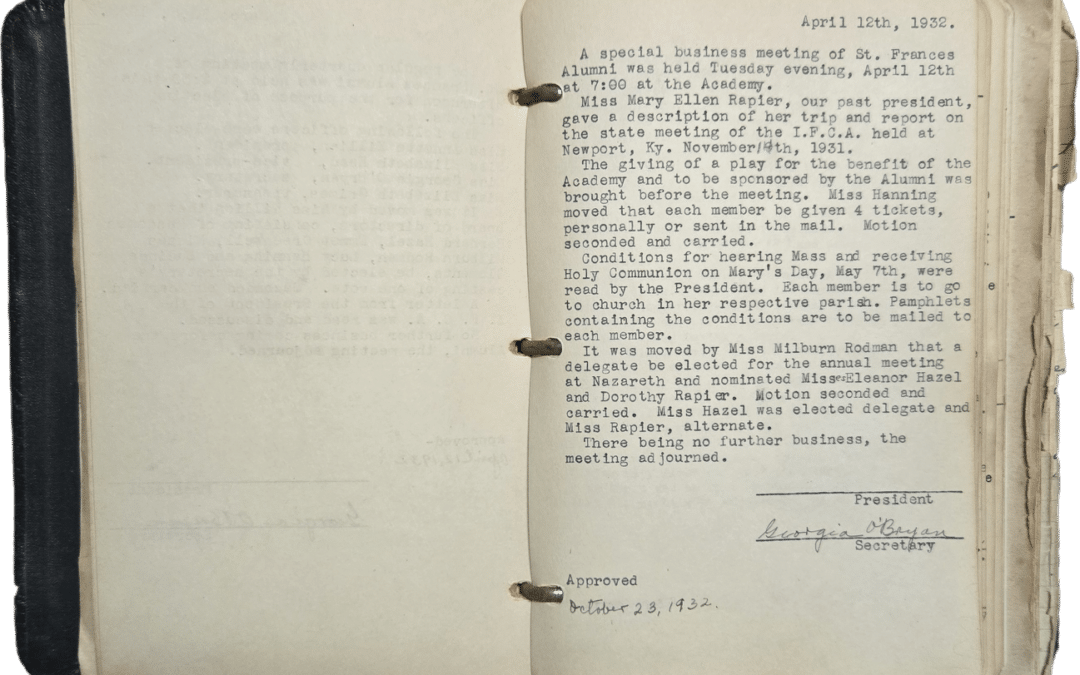
History can never be completely recreated. However, an honest historian can always do their best to present the most complete and accurate account that can be mustered from the sources available.

One of the most elaborate religious celebrations ever held in historic Daviess County took place at St. Peter’s Church near Stanley on Oakford Road in October 1910.