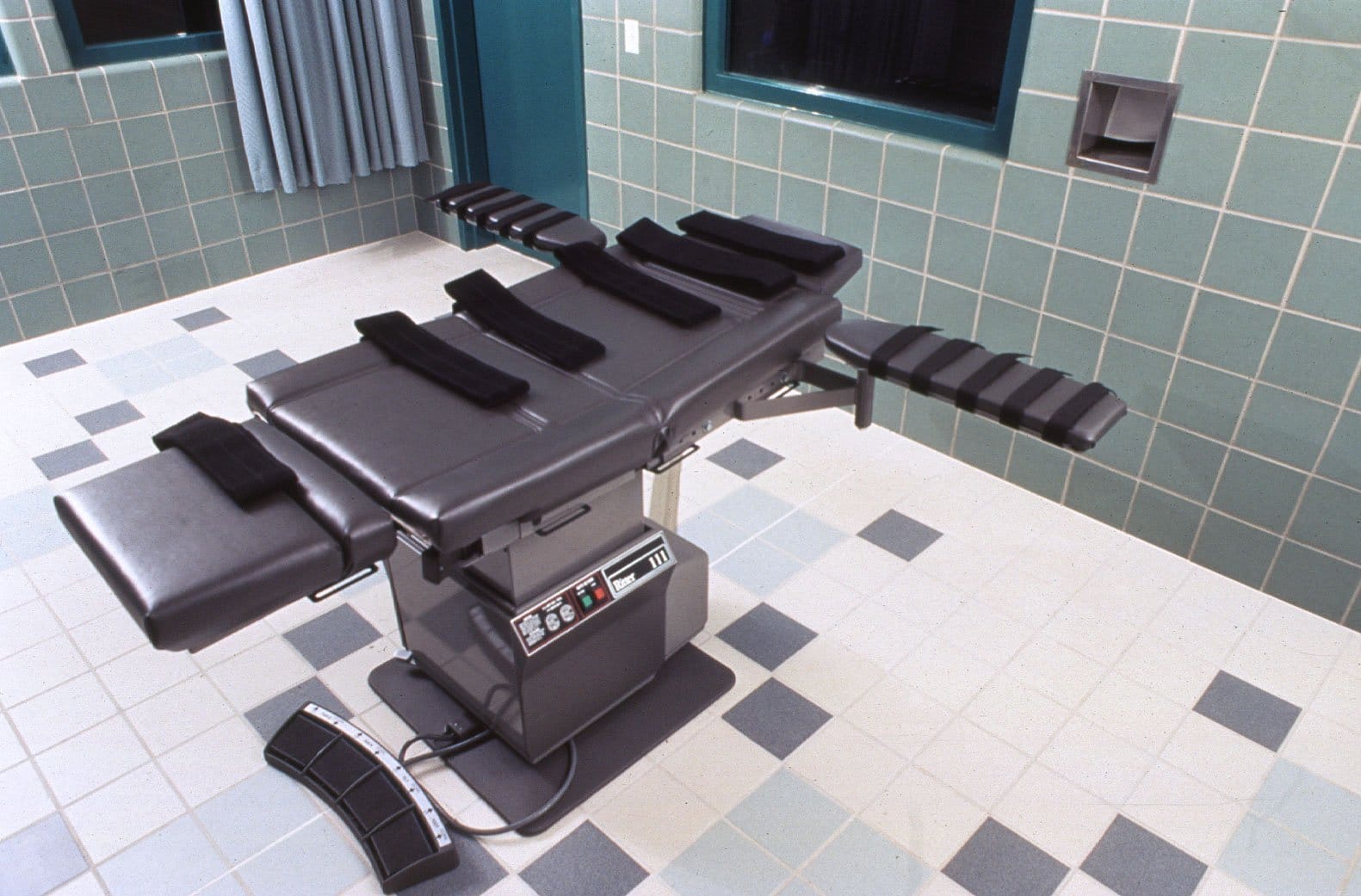
A file photo shows the lethal-injection chamber at the federal correction facility in Terre Haute, Ind. After Tennessee officials failed in their Sept. 30, 2026, attempt to execute death-row inmate Christa Gail Pike for a 1995 murder, Catholic opponents of the death penalty said that the incident demonstrates the flaws with capital punishment. OSV NEWS PHOTO/FEDERAL BUREAU OF PRISONS
Kentucky has not executed anyone since 2008. Let’s permanently end the death penalty in the Commonwealth.
BY JASON D. HALL, CATHOLIC CONFERENCE OF KENTUCKY
The recent failed execution of Christa Pike by the State of Tennessee has highlighted many grave questions surrounding the continued use of the death penalty. These questions warrant urgent consideration as Kentucky officials move to resume executions.
While a number of death sentences have been handed down, the Commonwealth has not executed anyone since 2008. This is largely due to a series of legal challenges to the methods and administration of the death penalty that have been winding their way through the courts. The approaching conclusion of those court cases and recent actions by the legislature are rapidly moving us toward a resumption of executions.
In recent decades, the legislature has acted to both limit and expand capital punishment in various ways.
In 1998, passage of the Racial Justice Act made Kentucky the first state to expressly prohibit seeking or imposing the death penalty on the basis of race. In 2022, the legislature excluded from the death penalty defendants who were diagnosed with any of four serious mental illnesses at the time of the offense.
On the other hand, the legislature has also expanded the list of offenses for which a defendant could be executed. That list of aggravating circumstances also apply to a sentence of life without parole, and several legislators voted for those bills while publicly stating they supported the exclusion of parole but would also support abolition of the death penalty if it were being considered on its own.
Earlier this year, legislators passed SB 251, which could bring further legal challenges to a halt. The ongoing litigation largely concerns the Department of Corrections regulations that govern the administration of the death penalty. SB 251 would allow the Department to adopt or amend policies immediately, without going through the administrative regulation review process, which can take some time.
The core constitutional claims in the current litigation are approaching a trial and seem likely to be decided on the legal merits. In the event of future legal challenges, however, the Department of Corrections will, under SB 251, have the ability to more quickly respond to court decisions, with less opportunity for legislative oversight and public comment, and move forward with executions.
Because of the longstanding moratorium, the death penalty has receded as an urgent political issue in the minds of many in Frankfort. With the prospect of a resumption of executions, perhaps several in a short period of time, interest and urgency should increase. It has been over 10 years since there was a legislative committee hearing and debate on abolition of the death penalty. The change in circumstances makes it likely there will be an opportunity to renew that conversation.
Each session, there are bills in both the House and Senate, with bipartisan support, that would abolish capital punishment. Our hope for 2027 is that those bills can be seen more as serious proposals that deserve serious consideration. We have many legislators who have stated publicly their support of abolition. There is no doubt of more who would be in support but have not made that clear.
Please join us in asking members of the House and Senate to cosponsor legislation to end the death penalty in Kentucky. If we can show strong bipartisan support for these bills, that will bring this issue to the forefront and spark a real debate about the future of capital punishment in Kentucky.
Jason D. Hall serves as the executive director of the Catholic Conference of Kentucky, the public policy voice for the Catholic Church in Kentucky. Learn more at https://ccky.org.