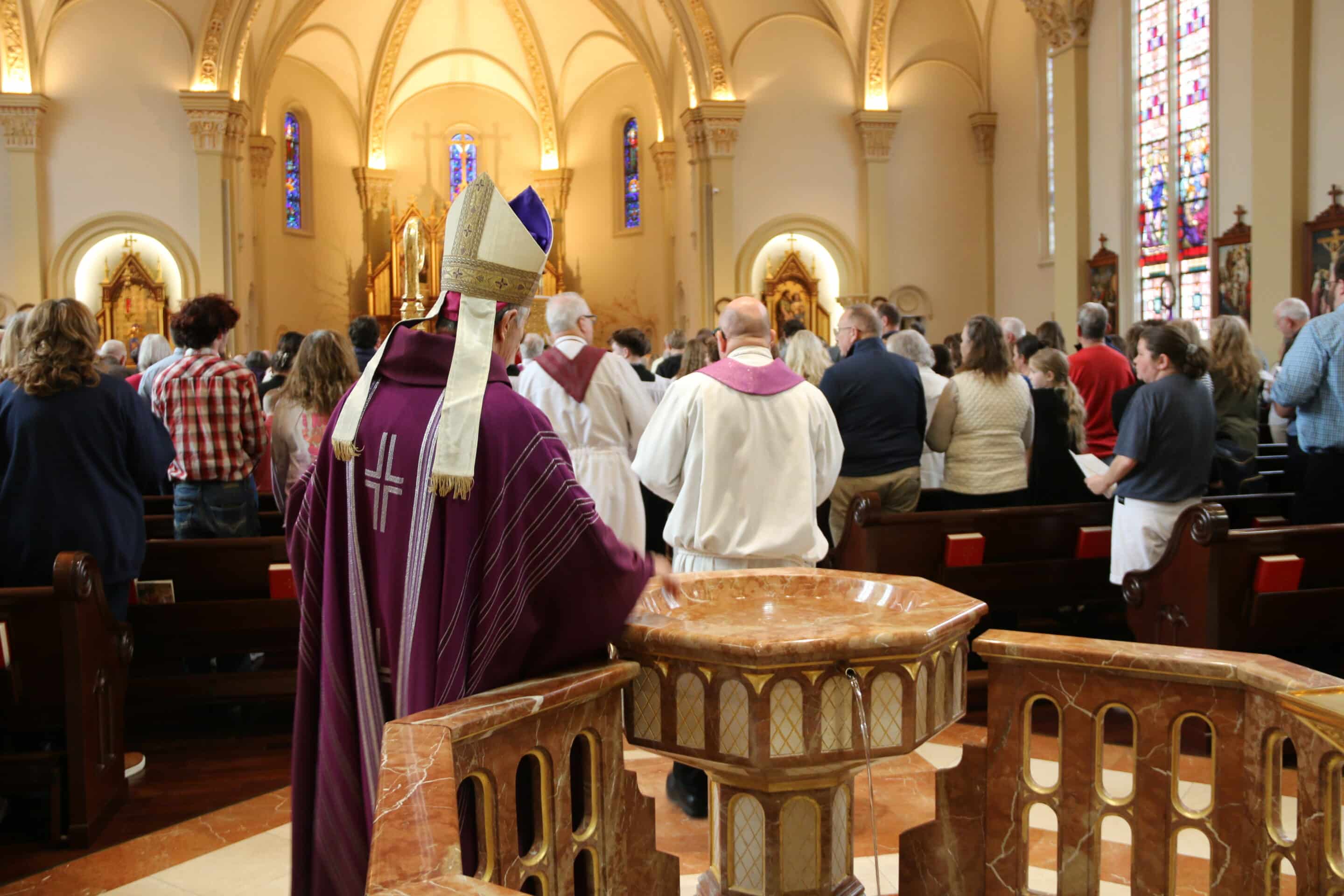
Bishop William F. Medley reaches into the holy water font while processing up the aisle for Ash Wednesday Mass at St. Stephen Cathedral on Feb. 18, 2026. ELIZABETH WONG BARNSTEAD | WKC
More than 40 days: Lent, conversion, and life in a divided nation
BY DCN. JAY W. VANHOOSIER, OFFICE OF FAITH FORMATION
The Lenten season offers the faithful far more than a chance to give up chocolate, social media, or other temporary comforts. While such sacrifices can be helpful starting points, Lent ultimately invites a deeper conversion of heart – one that forms lasting, transformative habits. In a time marked by division, especially within the current political climate of the United States, Lent presents a unique and urgent opportunity to practice habits that reshape not only our personal spirituality but also the way we encounter one another.
At its core, Lent is a season of preparation, leading believers to the renewal of Easter. The traditional pillars of prayer, fasting, and almsgiving are not ends in themselves; they are means of reorienting our lives toward God and neighbor. When these practices remain superficial or purely temporary, their impact fades quickly. But when they are embraced intentionally, they can become habits that endure beyond forty days, shaping how we think, speak, and act in the world.
One of the most pressing areas in need of transformation today is how we relate to those who are different from us. The political and cultural climate in the United States has fostered deep suspicion, harsh rhetoric, and an “us versus them” mentality. Political affiliation, cultural background, race, and immigration status have too often become reasons for fear or hostility rather than opportunities for encounter. Lent challenges the faithful to resist this impulse by cultivating habits of listening, empathy, and charity.
Fasting during Lent, for example, can be expanded beyond food to include fasting from dismissive language, inflammatory media, or the quick judgment of others. Choosing to refrain from reducing people to labels – such as “liberal,” “conservative,” “immigrant,” or “outsider” – can be a powerful spiritual discipline. This kind of fasting creates interior space for humility and reminds us that every person bears inherent dignity, regardless of political stance or legal status.
Similarly, prayer during Lent can move beyond personal petitions to include intentional intercession for those with whom we disagree or struggle to understand. Praying for people of differing political views or cultural experiences does not require abandoning convictions; rather, it softens hearts and helps believers see others as persons rather than problems. Over time, this habit of prayer can transform resentment into compassion and fear into openness.
Almsgiving, too, can be lived as more than financial generosity. It can take the form of giving time, attention, and presence – especially to those whose stories differ from our own. Engaging in conversations with people from different backgrounds, supporting ministries that serve immigrants or marginalized communities, and advocating for policies rooted in human dignity are concrete ways Lent can foster lasting habits of solidarity.
Ultimately, Lent is not about temporary self-improvement but about lifelong conversion. By moving beyond simple sacrifices and embracing practices that transform how we encounter others, the faithful can allow this season to shape a more Christ-centered way of living. In a divided society, such transformation is not only spiritually enriching – it is a powerful witness of hope, reconciliation, and love.
Dcn. Jay W. VanHoosier is the director of faith formation for the Diocese of Owensboro. For more information visit owensborodiocese.org/faith-formation, email jay.vanhoosier@pastoral.org or call (270) 852-8324.
Originally printed in the March 2026 issue of The Western Kentucky Catholic.